Advanced Technology within an Aluminum Foundry
Unlocking the Benefits of Aluminum Metal Castings: Why Foundry Solutions Are Essential for Manufacturers and Industries
Aluminum metal castings deliver considerable value to a wide range of industries. Their lightweight and durable nature positions them as a preferred choice in sectors such as automotive and aerospace. Foundry solutions play a pivotal role in optimizing production processes. These innovations not only enhance efficiency but also align with sustainability goals. As producers work to elevate quality standards and lower expenses, grasping the intricacies of aluminum casting grows ever more essential. What implications do these innovations hold for the evolution of the manufacturing landscape?
The Distinctive Characteristics of Aluminum Metal Castings
Aluminum metal castings feature an exceptional set of characteristics that make them highly advantageous in a wide range of applications. Their reduced mass significantly decreases overall product weight, boosting fuel performance in transport-related industries. Moreover, aluminum demonstrates outstanding resistance to corrosion, guaranteeing longevity in challenging surroundings. Its thermal conductivity enables efficient heat management, making it perfectly suited for automotive and electronic components.
Moreover, aluminum can important information be easily machined and formed, facilitating intricate designs and reducing production costs. The alloying properties of aluminum boost its structural properties, permitting producers to adapt castings to meet specific performance demands. This adaptability makes aluminum suitable for a broad range of industries. Finally, aluminum's eco-friendly recyclability advances sustainable practices, as it may be reused without compromising its natural properties. Combined, these exceptional qualities cement aluminum metal castings as an indispensable material in modern production, providing both efficiency and performance in diverse applications.
Major Industries That Benefit From Aluminum Castings
Various industries leverage the benefits of aluminum castings to enhance their products and processes. The automotive industry employs aluminum castings for weight-reduced parts, enhancing fuel economy and overall performance. In the aerospace industry, manufacturers appreciate aluminum's strength-to-weight ratio for critical parts that must endure extreme conditions. The electronics manufacturing sector gains value from aluminum castings by producing sturdy and visually appealing housings for electronic devices.
Additionally, the building sector uses aluminum castings for structural elements, benefiting from their long-lasting corrosion-resistant properties. The marine industry also relies on aluminum castings to manufacture parts capable of enduring challenging conditions while reducing overall vessel weight. Lastly, manufacturers of healthcare equipment use aluminum castings for medical devices, emphasizing hygiene and reliability. Collectively, these industries demonstrate the flexibility and fundamental significance of aluminum castings in advancing progress and productivity across varied uses.
Why Aluminum Proves More Cost-Effective Than Other Metals
Aluminium proves to be a economically advantageous option because of its lightweight yet durable qualities, making it a perfect fit for numerous applications. Reduced manufacturing expenses also strengthen its attractiveness, allowing manufacturers to optimize budgets without sacrificing product excellence. Moreover, its outstanding heat transfer capability positions aluminum as a practical option for industries requiring optimal heat dissipation.
Compact Yet Long-Lasting Solution
Cost-effectiveness in material selection often copyrights on striking an equilibrium between weight and durability. Aluminum proves to be a compelling choice due to its lightweight properties, helping to achieve lower shipping and management expenditures. Aluminum's remarkable structural efficiency ensures that products can withstand significant stress without sacrificing ease of movement. Furthermore, aluminum's resistance to corrosion improves its overall lifespan, minimizing the necessity for regular substitutions. This robustness leads to lower lifecycle costs, positioning aluminum as a wise financial choice within the manufacturing sector. Additionally, its flexible nature supports a broad spectrum of implementations throughout various sectors, including transportation and aviation. In opting for aluminum, fabricators gain both economic advantages but also enhance the quality and dependability of their output.
Lower Production Costs
Producers regularly discover that aluminum provides considerable benefits in manufacturing expenses compared to alternative metals. The metal's reduced density enables reduced material usage, which immediately results in financial savings. Additionally, the metal's straightforward machining and fabrication process lowers workforce expenses and operational time, making it a more efficient choice for manufacturers. Aluminum's outstanding recyclability continues to strengthen its economic value, as recycled aluminum requires only a fraction of the energy needed for primary production. Moreover, the metal's strength and corrosion resistance result in reduced upkeep expenses throughout the product's life. By choosing aluminum for metal castings, producers can realize significant cost reductions while upholding premium quality benchmarks, positioning themselves favorably in competitive markets.
Superior Thermal Conductivity
A defining quality of aluminum is its outstanding thermal conductivity, which substantially increases its cost-effectiveness in numerous applications. This characteristic empowers aluminum to conduct heat with great efficiency, making it an excellent selection for industries demanding quick thermal management, such as the aerospace and automotive industries. Compared to other metals, aluminum's capability to move heat while minimizing energy loss reduces operational costs, particularly in thermal management systems. In addition, its minimal weight profile means that frameworks can be constructed with minimal material without diminishing effectiveness, further driving down costs. To recap, aluminum's superior thermal conductivity delivers both functional benefits and significant cost savings, reinforcing its standing as a favored material in industrial and manufacturing environments.
How Do Foundry Solutions Enhance Production Efficiency?
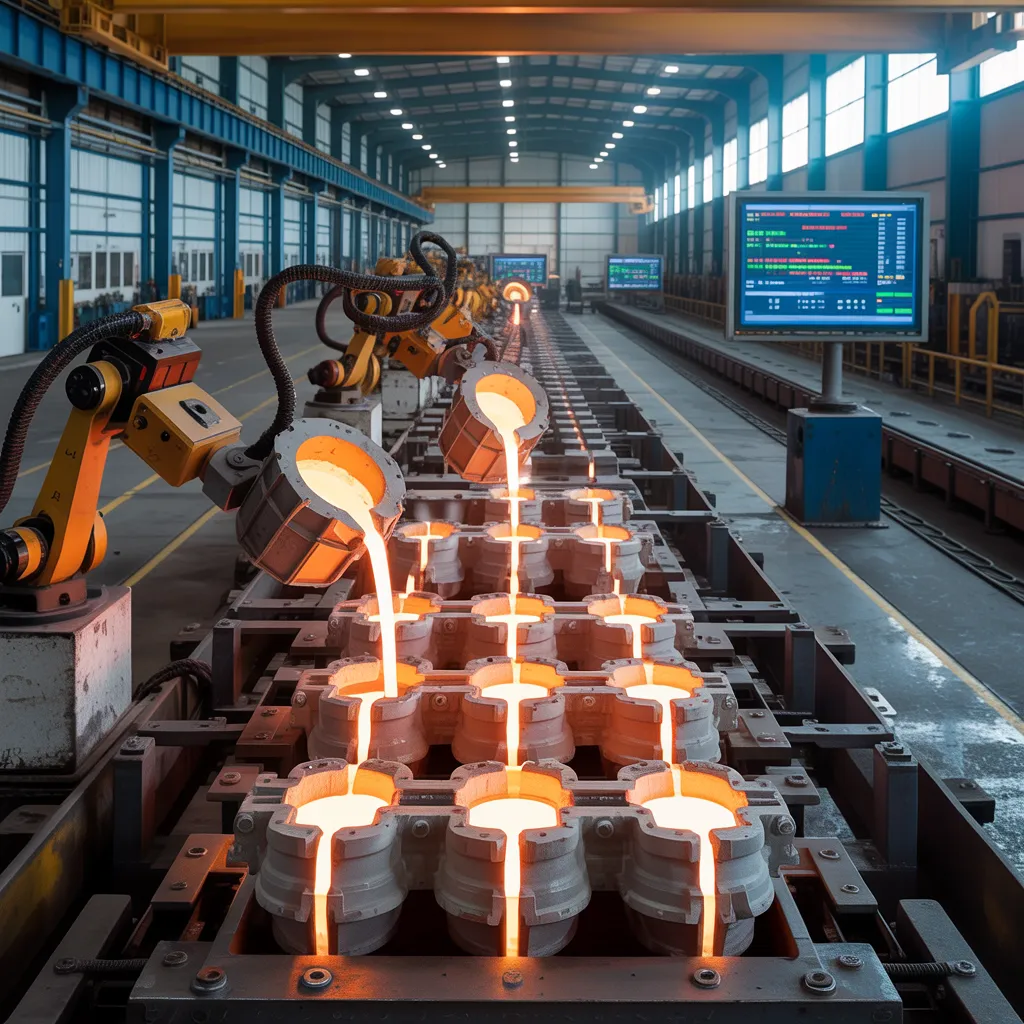
As production demands increase, foundry solutions serve a critical function in improving operational efficiency. These solutions simplify processes through the incorporation of advanced technologies, automation, and refined workflows. By utilizing precision casting techniques, manufacturers cut waste and reduce energy consumption, which considerably drives down operational costs.
Additionally, foundry technologies facilitate accelerated prototyping and reduced lead times, allowing companies to respond swiftly to market changes. The integration of continuous monitoring and advanced data analytics enhances decision-making, guaranteeing that production parameters remain continuously refined.
In addition, expert staff versed in current foundry processes lead to enhanced quality management, lowering defects and revisions. Improved cooperation between design and manufacturing teams leads to advanced casting concepts that are both efficient and cost-effective. On the whole, these factors collectively enhance manufacturing productivity, fostering a more competitive landscape for businesses employing aluminum metal castings.
Eco-Friendly Approaches in Aluminum Casting
Adopting sustainable practices in aluminum casting considerably decreases ecological footprint while improving operational performance. Several manufacturing plants are adopting recycling programs, using recycled aluminum as a key source material. This method not only protects natural resources but also requires considerably less energy in contrast to mining and refining virgin aluminum.
In addition, advancements in technological development have produced more sustainable furnaces and casting processes, limiting harmful gas emissions. Implementing water-based solutions rather than solvent-based products effectively lowers volatile organic compounds (VOCs), enhancing atmospheric quality in foundry environments.
Additionally, effective waste management systems support the recovery and reuse of scrap materials, reducing contributions to landfills. By emphasizing environmentally sustainable practices, aluminum casting facilities can meet worldwide environmental regulations and appeal to eco-conscious consumers. Ultimately, these practices not only benefit the planet but also bolster the lasting viability and competitive edge of producers in a fast-changing market.
Upcoming Trends in Aluminum Castings and Foundry Solutions
What advancements are defining the future of aluminum castings and foundry solutions? Cutting-edge technologies such as artificial intelligence and machine learning are improving process optimization and quality control. These innovations enable manufacturers to predict defects and streamline production, resulting in reduced waste and improved efficiency.
Furthermore, breakthroughs in 3D printing are reshaping mold creation, supporting quick prototyping and customization of complex designs. This adaptability supports the expanding demand for lightweight, high-performance parts across numerous industries, including automotive and aerospace.
Sustainable practices remain a pivotal focus, with foundries increasingly adopting recycling practices and energy-efficient technologies. The integration of digital twin technology facilitates predictive maintenance and real-time monitoring, significantly improving workplace performance.
As the industry evolves, collaboration between manufacturers and technology providers will drive the creation of innovative and eco-friendly foundry solutions, ultimately driving innovation in aluminum casting processes.
Commonly Asked Questions
What Categories of Products Are Frequently Produced From Aluminum Castings?
Common products made from aluminum castings include automotive parts, industrial equipment parts, consumer electronics housings, aviation components, and decorative items. Such uses utilize aluminum's lightweight, corrosion-resistant, and malleable properties for superior strength and reliability.
How Does Aluminum Casting Measure Up Against Steel in Terms of Strength?
Aluminum castings tend to be lighter than their steel counterparts, providing similar strength-to-weight ratios. Although steel generally offers greater tensile strength, developments in aluminum alloys have significantly improved their performance, rendering them appropriate for a wide range of applications.
What Is the Standard Lifespan of Aluminum Castings?
The expected lifespan of aluminum cast parts ranges from 10 to 50 years, depending on factors such as intended application, alloy composition, and environmental conditions, rendering them an enduring choice across diverse industries and applications.
Do Aluminum Castings Offer Corrosion Resistance?
Aluminum castings display excellent corrosion resistance as a result of the development of a protective oxide layer. This feature renders them well-suited for numerous applications, particularly in environments where moisture and harsh conditions are frequently encountered.
How Can I Choose the Right Foundry for My Needs?
To identify the most suitable foundry, one must assess their capabilities, industry experience, quality standards, and customer service. In addition, consulting past project records and requesting referrals can help guarantee alignment with specific manufacturing needs and expectations.